


Published 6th Oct 2026
Why Black Display Hardware? Raising the Benchmark


Silver aluminium has been the default finish in portable display for as long as most of the trade can remember, and there’s a good reason for that. It works. It’s light, durable, easy to extrude and finish, and it’s helped printers produce reliable displays for decades.
What has changed is everything around the hardware. The retail interiors, showrooms, reception areas and exhibition stands these products stand in have moved on considerably over the past decade, and display hardware has largely stayed where it was.
So we started asking ourselves a simple question.
If the spaces around display hardware have evolved, why should the hardware itself stay the same?
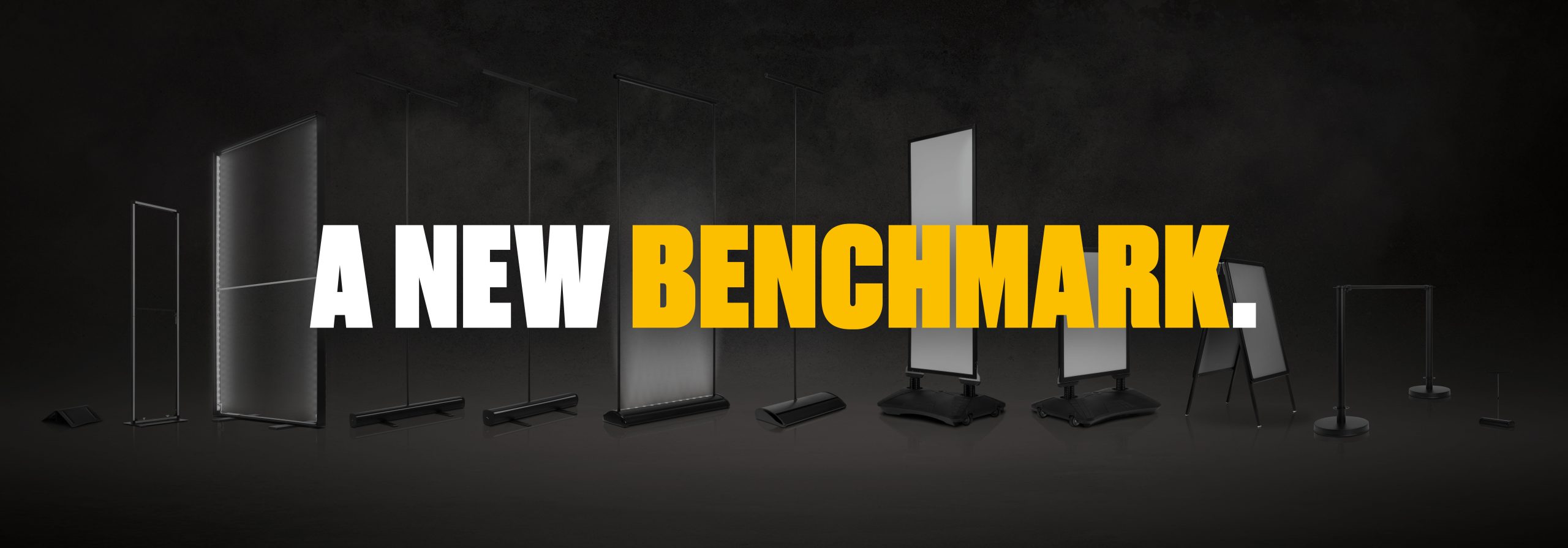
The Innotech Black Collection is our answer. The first dedicated black display hardware range available to the UK print trade, it takes familiar display formats and introduces them in a sleek, powder-coated matt black finish.
It’s the same practical display hardware but a completely different look and we think, a new benchmark for what display hardware can be.
Silver As The Traditional Standard
Anodised aluminium (silver) became the default in the industry because it solved the problem, and it solved it well. It’s corrosion resistant, holds a consistent finish across extrusions from different batches, survives repeated setup and transport, and costs very little to produce at volume. Roller banners, lightboxes, pavement signs and freestanding displays have been produced in aluminium finishes for decades, and printers know exactly what to expect from them.
We’re not suggesting that needs to change. For plenty of briefs it’s still exactly the right specification, and our standard exhibition display range isn’t going anywhere. But a standard nobody has questioned isn’t quite the same as a standard that’s been tested and confirmed.
That’s our thinking behind our collection of black display hardware.
When printers already offer customers a choice of substrates, finishes, inks and graphics, it made sense to us that the hardware should offer more choice too.
The Environments Around Display Hardware Have Evolved
You only have to look outside the print industry to see how much has changed.
In architecture, black-framed glazing has gone from a period restoration detail to a mainstream specification on new build and commercial fit-out. Black ironmongery, matt black taps, handles and switchplates have followed the same path, from a design-led choice to something developers now specify as standard on a premium scheme.
Automotive made the same move, and monetised it. Black Packs, Night Editions and shadowline trims sit on the options list as a paid upgrade. Chrome was the premium finish for the best part of a century; today it’s the thing customers pay extra to delete.
Retail moved earliest and most completely. Walk into any store fitted in the last five years and the rails, framing, shelving brackets and display fixtures are more likely to be black than anything else.
These are the same environments our customers are supplying.
Your customer’s display often stands in a space somebody has specified deliberately, right down to the door handles. A silver banner cassette in a scheme built from black steel, timber and concrete doesn’t read as a considered part of that space.
The Benefits of Black Display Hardware
A change of finish sounds cosmetic, but a black frame behaves differently around a printed graphic, and it’s worth understanding why before you put it in front of a client.
It Puts the Graphic First
Silver is reflective. Under exhibition lighting, retail spots or a photographer’s flash it picks up highlights along the cassette and poles, and the eye finds those bright edges before it finds the print.
A powder-coated black frame does the opposite. It absorbs rather than reflects, recedes into whatever sits behind it, and creates a strong, neutral contrast against the printed graphic.
Colours read as more saturated and the message stays the focal point. The effect is most pronounced with illuminated displays, where a dark surround measurably increases the perceived contrast of the lit panel. That’s why black is the near-universal choice on retail and airport signage.
It’s also an easy argument to make to a client. The graphic is what they’ve paid to design and produce, and it should be the thing people look at.
It Works Across More Design-Led Environments
Silver is a material statement as much as a colour. It reads specifically as aluminium and coordinates well with brushed steel and white. Put it against timber, exposed brick, concrete or a strong brand colour and it either matches the scheme or fights it, with not much in between.
Black behaves closer to a neutral. It sits comfortably alongside timber, concrete, glass, metal and colourful finishes without asserting itself, which makes it far more forgiving across a range of interiors.
That is useful for multi-site work. A retail customer rolling displays out across twenty stores with different fit-outs, or a hospitality group covering both interiors and outdoor frontages, can specify one hardware finish that works everywhere. It’s a simpler conversation and a simpler order.
It Gives Printers More Choice
The commercial benefit here sits with you rather than with the display. Black hardware gives you another option to put in front of a customer without sourcing an unfamiliar supplier, on products you already stock and already know how to specify. It all sits within the same exhibition display range and ships on the same terms.
It also gives you something to say when a client is weighing up three quotes for the same silver stand.
Industries That Use Black Display Hardware
Black suits environments where the display forms part of a designed interior rather than a temporary addition to it. There’s more detail on the Black Collection page, but the main applications are:
- Retail interiors, premium concessions and flagship stores, where the fixtures are already specified in dark finishes
- Car, motorcycle and equipment showrooms, where the display sits alongside vehicles specified with shadowline and black trim
- Hospitality, restaurants, bars, hotel lobbies and outdoor seating, where the frontage has usually been designed as a whole
- Corporate reception areas and workplaces, particularly in recently fitted commercial buildings
- Design-led exhibitions and trade shows, and any event where the stand will end up in photography
Outdoor work deserves a mention of its own. A pavement sign or A-frame normally sits against a shopfront rather than inside a designed scheme, and a dark frame reads as deliberate against brick, timber and glazing. Silver in the same position can look like hire equipment.
What Doesn’t Change When You Specify Black
This is usually the first question a production manager asks, and the answer is the reason black is a straightforward addition to a quote rather than a complication.
- Your artwork – Every product in the collection is based on an existing system, so graphic sizes, fixings and cassette widths match the equivalent aluminium product. Templates already approved for a silver stand go straight onto the black version without amendment.
- Your media – Any roll-up film or banner material you already specify works exactly the same way. Stay-flat media such as Max-Flat remains the sensible pairing, and black back blockout materials are there for graphics where light bleed through the back would spoil the effect.
- Your margin – Black hardware is typically no more than around 10% above the equivalent aluminium version, and on many products the difference comes down to a pound or two per unit. It’s rarely the reason a client says no.
- Your deadline – The collection sits in the same stock holding and ships on the same next-day dispatch as the standard range, so specifying black puts nothing at risk on a tight turnaround.
- Your reputation – The finish is powder coated rather than painted, which bonds a dry finish to the aluminium under heat. It’s harder wearing than paint and more resistant to chipping and scratching through repeated setup, transport and storage, and marks from normal handling generally wipe off with a soft cloth.
What’s in the Black Collection?
The Black Collection launches with the display formats printers specify most often, each one carried over from a product you already know.
- Black roller banners
- Black pavement signs and outdoor displays
- Black cafe barriers
- Black lightboxes and freestanding displays
- Black poster holders
This Is the First Step, Not the Last
We’ve spent years innovating in print, in materials and in production, while the hardware holding those graphics up stayed more or less where it was. Closing that gap is what this collection is for, and the products launching now are a starting point rather than a finished range.
We think display hardware should evolve alongside the environments it stands in. Black is where that begins.
Browse the Black Collection to see the full range, or register for a trade account to view trade pricing across black and standard display hardware. We offer free samples on most products, so you can put the finish in front of a client before anyone commits to an order – get in touch and we’ll arrange it.
Latest blog posts
View all posts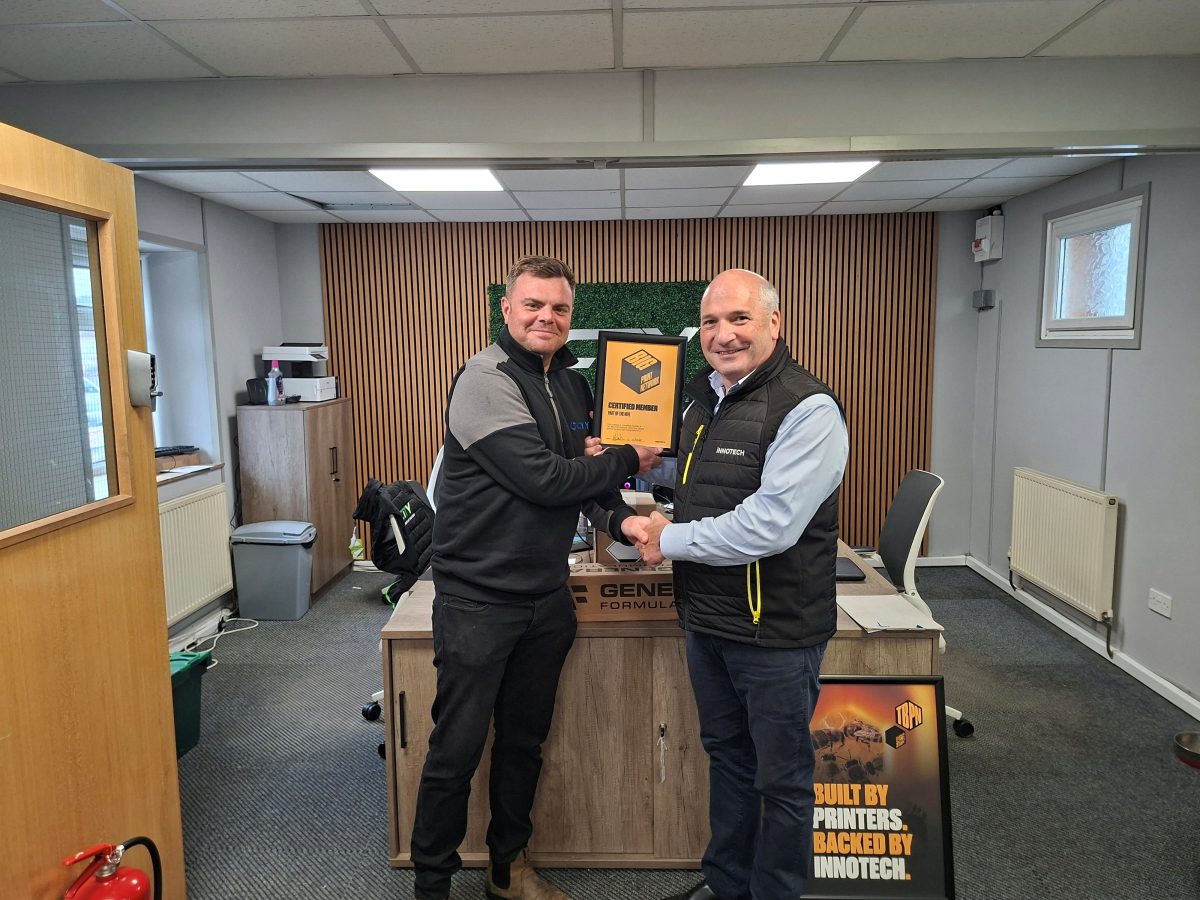
21st September 2026
City Signs & Graphics joins The Big Print Network
Leeds-based commercial signage business joins Innotech’s ambassador programme City Signs & Graphics has become [...]
19th August 2026
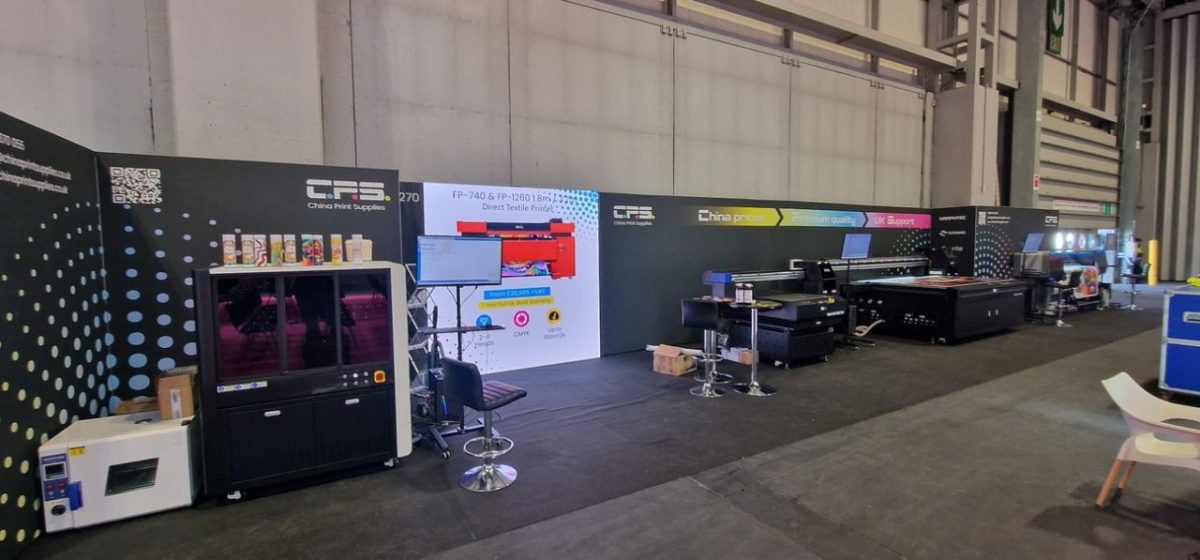
China Print Supplies to partner with Innotech at The Sign Show
CPS machines will run selected Innotech media, with qualifying sales at the show receiving a £1,000 print media [...]

14th July 2026
Summer Signage Ideas for Print Businesses
Summer is one of the busiest, brightest seasons in any sign maker’s calendar. From pub gardens and food festivals to [...]